
–
Working together to protect marine habitats
In mid-November, students from Klax School travelled to Thessaloniki to visit the 8th Primary School of Evosmos as part of the Erasmus+ project. Three weeks later, the return visit took place: five sixth-grade pupils from Greece came to Berlin accompanied by three teachers.
Students from both schools are part of the European network "Our Happy Future", in which partner schools have been working on the 17 United Nations Sustainable Development Goals since 2022. In addition to digital exchange via the eTwinning platform, personal encounters are a central component of the collaboration.
Research, observe, act
Within the network, students set a thematic focus each school year. In the current school year, the joint project is entitled "Eco Explorer". Students research animals and plants in different habitats, document their discoveries, gather background information and explore how human activity affects nature. Based on this work, they develop their own ideas for protecting living organisms.
During their stay in Berlin, the Greek guests became familiar with everyday life at Klax School. Together with Klax students, they worked on topics directly linked to their experiences in Greece in lessons across different year groups. They compared Mediterranean species studied together in Thessaloniki with animal and plant species found in the Baltic Sea.
Discovering marine conservation through play
The project was particularly vivid in the joint card game "Fish and Ships", in which the students explored the marine food pyramid. They selected a marine creature, researched it and developed ideas for its protection. The results were then creatively implemented: using Micro:bits, the students programmed illuminated displays with appropriate slogans while also developing their digital skills.
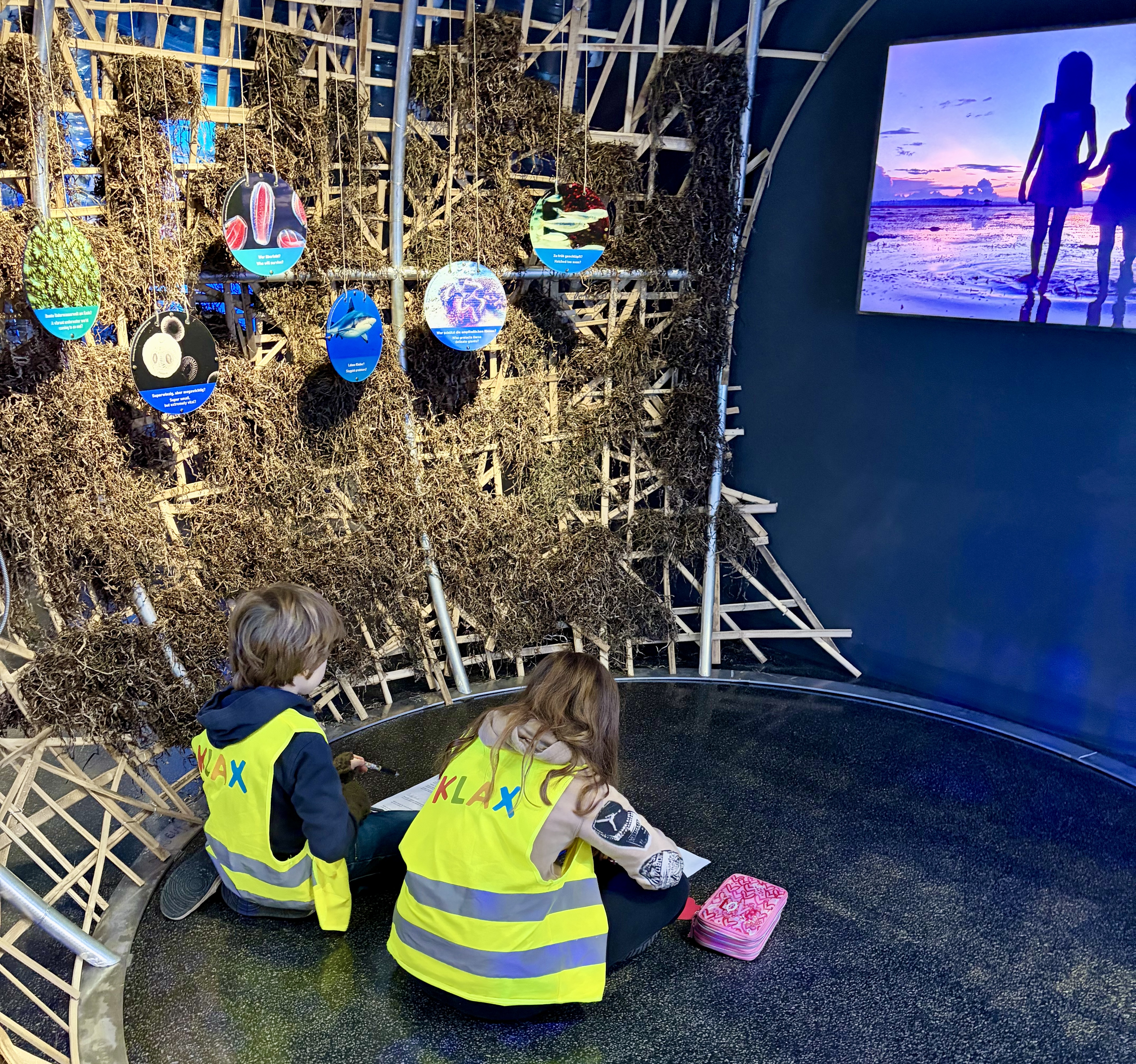
Another highlight was a visit to the Futurium and its special exhibition "Ocean Futures". There, the pupils addressed global challenges such as plastic pollution, climate change and overfishing and explored innovative solutions including the restoration of seagrass meadows. In a workshop at Klax School, mixed groups worked with Lego WeDo to develop a prototype for protecting selected marine life – turning learning and experimentation into a hands-on experience.
(Funded by the European Union. Views and opinions expressed are however those of the author(s) only and do not necessarily reflect those of the European Union or the National Agency. Neither the European Union nor the granting authority can be held responsible for them.)